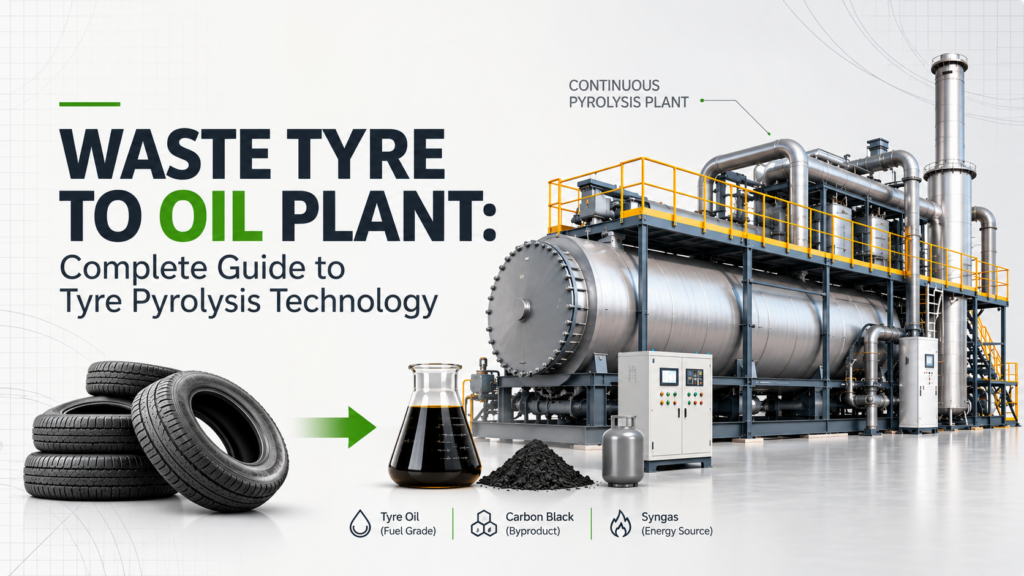
| Quick answer: A waste tyre to oil plant heats scrap tyres in a sealed, oxygen-free reactor until the rubber breaks down into pyrolysis oil, carbon black, steel wire and combustible gas. One tonne of tyres usually gives 400 to 450 kg of oil. Nothing burns inside the reactor, which is why the process is called pyrolysis and not incineration. |
Every year, millions of tyres reach the end of their life, and most places still don’t have a good answer for them. Landfills turn them away, stockpiles catch fire, and open burning fills the air with thick black smoke. Pyrolysis is the most practical fix so far, because it turns a disposal problem into products that people will pay for. This guide explains how a tyre oil plant works, what comes out of it, which machine suits which business, and what to check before you spend money.
Why Choose a Waste Tyre to Oil Pyrolysis Plant Over Landfill or Burning?
Dumping a tyre in a landfill wastes space, and the pile can smoulder for months once it catches fire. Open burning is worse, because it releases soot and toxic fumes straight into the neighbourhood. A waste tyre to oil pyrolysis plant takes a different route. The tyres are heated in a closed vessel, the vapour is captured, and nothing is allowed to escape unchecked. Instead of a fire hazard, you end up with four products you can sell. That’s the whole business case in one sentence, and it’s why governments in many countries now encourage recycling over dumping.
How Does a Waste Tyre to Oil Pyrolysis Plant Work?
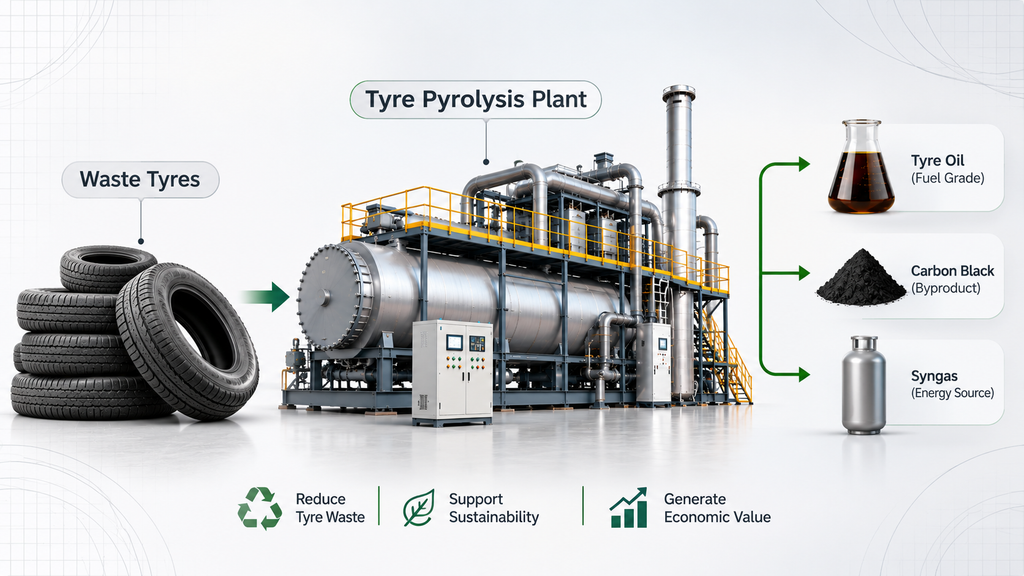
The process runs in five stages. It sounds technical, but the logic is simple: heat the tyres without air, collect what comes off, and reuse what you can.
- Feeding. Whole or shredded tyres go into the reactor. Many batch machines take whole tyres, which saves the cost of a shredder.
- Heating. The sealed reactor is heated from outside with fuel oil, coal, wood or, later on, the plant’s own gas.
- Cracking. Between roughly 280°C and 450°C the rubber softens and turns into hot vapour.
- Condensing. The vapour passes through water-cooled condensers. The heavy part becomes liquid oil, while the lighter gas stays uncondensed.
- Recycling the gas. That leftover gas is cleaned and sent back to the burner, so the plant covers part of its own fuel needs.
When the reactor cools down, the operator discharges the carbon black and pulls out the steel wire. Then the next load goes in. A well-built waste tyre to oil pyrolysis plant repeats this cycle day after day with very little fuss.
What Does a Waste Tyre to Oil Plant Produce?
Yields change with the tyre type and the operating temperature, so read these figures as typical ranges and not guarantees.
| Product | Typical yield | Common use |
| Pyrolysis oil | 40–45% | Industrial burner fuel, furnace oil substitute, refining feedstock |
| Carbon black | 30–35% | Fuel briquettes, filler or pigment after processing |
| Steel wire | 10–15% | Sold as scrap to steel mills |
| Combustible gas | 8–15% | Burned to heat the reactor |
Truck and bus tyres usually give a little more oil than car tyres, because they carry more rubber by weight. Steel wire and carbon black are the products new buyers tend to overlook, yet together they can cover a good share of your running costs.
What Raw Material Can a Tyre Oil Plant Handle?
Most machines accept car, truck, bus, motorcycle and off-the-road tyres. Some also take other rubber scrap such as conveyor belts, though yields differ. What the reactor doesn’t like is dirt, water and plastic contamination. Wet tyres waste fuel because the plant has to boil off the moisture first, and PVC plastic releases chlorine, which corrodes the equipment and spoils the oil. So keep your tyre yard dry, sort the feed, and shake out stones before loading. A little housekeeping protects the reactor, which is the most expensive part of the machine.
Which Type of Tyre Oil Plant Should You Choose?
Three designs dominate the market. The right one depends on your budget, your tyre supply and how much labour you can manage.
| Type | Typical capacity | Best for | Main trade-off |
| Batch | 6–12 tonnes per batch | Startups, small recyclers | Cooling time and more manual work |
| Semi-continuous | 15–30 tonnes per day | Growing businesses | Higher price, more automation to maintain |
| Fully continuous | 50–100 tonnes per day | Large recyclers | Highest cost, needs steady tyre supply |
If you’re just starting out, a batch tyre oil plant is the usual choice. It costs the least, it’s forgiving to operate, and you can add a second unit when the business grows. Continuous lines only make sense once you’re sure of a large and steady flow of tyres.
Main Components of a Tyre Oil Plant
Every waste tyre to oil pyrolysis plant, whatever the brand, is built around the same few parts.
- Reactor. The heart of the machine. Look for boiler-grade steel such as Q245R or Q345R, typically 14 to 18 mm thick.
- Condenser. Cools the vapour into oil. Weak cooling means lost oil and more gas.
- Dedusting and desulphurisation unit. Cleans the flue gas before it leaves the chimney.
- Gas recycling system. Feeds the burner so you use less fuel.
- Discharge system. Removes carbon black safely. A sealed screw conveyor keeps dust down.
- Control panel. Monitors temperature and pressure and carries the safety interlocks.
How Much Space and Manpower Does It Need?
A batch machine needs little room for the equipment itself, but tyre storage, oil tanks and the carbon black area take up much more. Plan for the whole site, not just the reactor, and keep fire lanes open. Most small plants run with two to four people per shift: one to load and discharge, one to watch the controls, and one to handle the products. Electricity use is modest, mainly for motors, pumps and the cooling circuit. Cooling water is recycled through a tower, so demand stays low once the system is filled.
Is a Waste Tyre to Oil Plant Safe and Eco-Friendly?
A modern waste tyre to oil pyrolysis plant can be, but only if it’s built and run properly. The reactor is a closed system, no open flame touches the tyres, and the gas it makes is reused as fuel. The risks come from cheap machines, poor welding and operators who skip the pollution control equipment. Raw oil also contains sulphur, so burning it without a scrubber isn’t clean. Before you buy, ask for the supplier’s emission test data and check which permits your local pollution control authority requires.
What to Check Before You Buy
- Ask for a working reference plant you can visit, not just photos.
- Compare reactor material, thickness and welding certificates.
- Confirm the pollution control package is included in the quote.
- Check spare parts supply and whether engineers will handle installation and training.
- Line up a tyre supply contract and buyers for oil and carbon black before you order.
- Sort out permits first. A finished plant that can’t legally run is an expensive ornament.
Key Takeaways
- A waste tyre to oil pyrolysis plant earns from four products, not just oil.
- Expect about 40 to 45 percent oil by weight.
- Batch plants suit beginners, and continuous plants suit large recyclers.
- Safety, permits and pollution control matter as much as the price.
Frequently Asked Questions
What is a waste tyre to oil plant?
It’s an industrial machine that converts scrap tyres into fuel oil, carbon black, steel wire and combustible gas. It uses heat in an oxygen-free reactor, so the tyres crack into smaller molecules instead of burning.
How much oil does one tonne of tyres give?
Most plants recover 40 to 45 percent oil by weight, so one tonne of tyres gives roughly 400 to 450 kg. Truck tyres tend to give more and car tyres a little less.
How long does one batch take?
Plan on about 12 to 16 hours from loading to discharge, including heating and cooling. The exact time depends on reactor size, the feed and how fast the plant cools.
Can I run a vehicle on the oil straight from the plant?
No. Raw pyrolysis oil is high in sulphur and contains gums that damage engines. It’s meant for industrial burners, or for refining into diesel first.
Do I need a licence to run a tyre oil plant?
Almost certainly. Most countries require environmental clearance and an operating permit from the pollution control authority. Check local rules before you order any machine.
What size plant should a beginner buy?
A single batch unit of about 6 to 12 tonnes is the safest start. It lets you learn the process, build buyers for your products and prove the numbers before you scale.
Ready to look at the money? Our breakdown of tyre to oil plant cost and ROI shows what a plant really costs to buy and run, and our guide to tyre pyrolysis oil explains what you can earn from the oil.