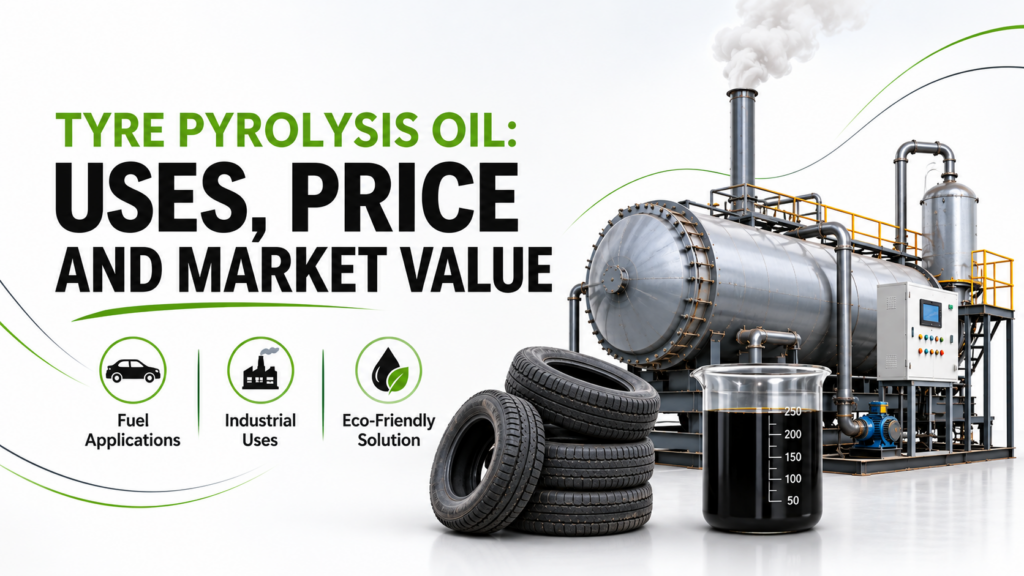
| Quick answer: Tyre pyrolysis oil (TPO) is a dark, strong-smelling fuel made by heating scrap tyres without oxygen. It’s used mainly as industrial burner fuel and as feedstock for refining into diesel. Raw TPO usually sells for roughly ₹22,000 to ₹48,000 per tonne, well below diesel, and the exact rate depends on quality, sulphur content and the buyer. |
Anyone planning a recycling business asks the same question sooner or later: who buys the oil, and at what rate? A waste tyre to fuel oil plant can make a steady stream of the stuff, but a tank of oil only turns into money when someone takes it away. This guide explains what TPO actually is, where it’s used, how it’s priced and what you can do to earn more per tonne.
What Is TPO Made Of and How Does It Behave?
TPO is a complex mix of hydrocarbons, a bit like a cross between diesel and heavy furnace oil. It’s dark brown or black, smells sharply of sulphur and rubber, and burns well. The table shows typical properties. They vary from batch to batch, so always test a sample.
| Property | Typical range |
| Appearance | Dark brown to black liquid |
| Density at 15°C | 0.90–0.96 g/cm³ |
| Calorific value | 41–44 MJ/kg, similar to furnace oil |
| Sulphur content | 0.5–1.5%, sometimes higher |
| Flash point | Low, often 30–60°C for crude oil |
| Water content | Up to a few percent before settling |
That low flash point is worth remembering. It means the oil needs careful storage and handling, and it’s why TPO isn’t a drop-in replacement for diesel.
Where Is TPO Used?
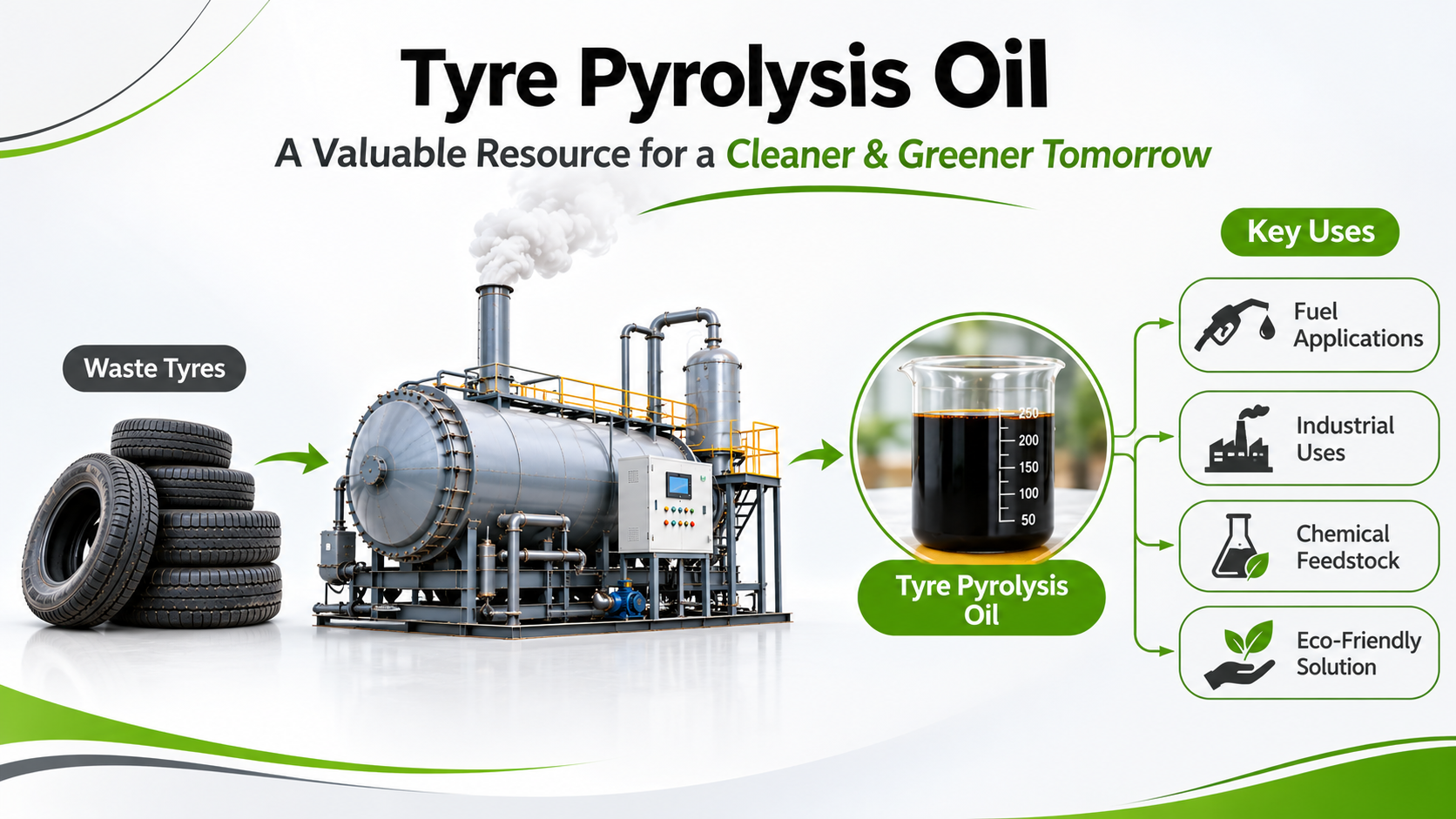
- Industrial burners and boilers. Brick kilns, steel re-rolling mills, foundries, ceramics and cement plants burn TPO in place of furnace oil.
- Blending. Some buyers blend it with furnace oil to bring fuel costs down.
- Refining into diesel. Distillation and desulphurisation turn TPO into a cleaner fuel for generators and machinery.
- Power generation. Heavy-duty generators can run on treated or blended TPO, usually after engine adjustments.
- Chemical fractions. Some processors separate valuable compounds from the oil.
What Is the Price of Tyre Pyrolysis Oil Today?
There’s no single global rate. TPO trades at a discount to furnace oil and diesel, and the gap depends on how clean the oil is. As a rough guide, raw oil sells for ₹22,000 to ₹35,000 per tonne in many markets, filtered and dewatered oil fetches more, and distilled diesel-grade fuel can approach 60 to 80 percent of the local diesel price. These figures are indicative, so check live quotes from local buyers before you build a business plan around them.
| Grade | Typical use | Indicative price (INR per tonne) |
| Raw TPO | Industrial burners | ₹22,000–35,000 |
| Dewatered and filtered TPO | Boilers, blending | ₹31,000–44,000 |
| Distilled diesel-grade fuel | Generators, machinery | ₹48,000–70,000 |
The distilled grade needs extra equipment and testing, so its higher rate isn’t pure profit.
What Affects the Price of Tyre Pyrolysis Oil?
- Crude and furnace oil prices. When they rise, TPO follows, usually at a discount.
- Quality. Water, ash, sulphur and flash point all pull the rate down when they’re poor.
- Volume and consistency. Buyers pay more for a steady supply of the same quality.
- Buyer type. Refiners and large industrial users pay differently from small workshops.
- Local rules and transport. Permission to sell and the distance to the buyer both change your net rate.
The price of tyre pyrolysis oil also swings with the season. Brick kilns and heating demand rise in some months and fall in others, so a good seller keeps storage space for the slow periods.
How Can You Earn More per Tonne?
Small improvements in handling can lift the price of tyre pyrolysis oil noticeably. Let the oil settle and drain the water. Filter out the carbon dust. Keep each batch’s quality consistent, and keep a written test report for every tank you sell. Once you have steady volume, selling direct to end users instead of through traders usually adds a better margin. A long-term supply contract also gives you something to show the bank.
How Does TPO Compare with Diesel and Furnace Oil?
| Fuel | Calorific value | Sulphur | Relative price |
| Diesel | 42-45 MJ/kg | Very low | Highest |
| Furnace oil | 40-43 MJ/kg | 1-4% | Medium |
| Raw TPO | 41-44 MJ/kg | 0.5-1.5% | Lowest |
On energy content alone, TPO holds its own against furnace oil. What holds the price down is variability. Buyers know a tank of TPO can differ from the last one, so they discount for the risk.
How Does a Waste Tyre to Fuel Oil Plant Make It?
A waste tyre to fuel oil plant heats tyres in a sealed reactor, and the hot vapour passes through condensers to become liquid. Quality is decided inside the plant. Overheating produces more gas and darker oil. Weak condensing loses the light fractions. A good waste tyre to fuel oil plant controls temperature carefully and has a proper dedusting step, so less carbon dust ends up in your tank.
How to Upgrade TPO into Diesel
Raw TPO can’t go straight into a vehicle. To make a diesel-like fuel, the oil is distilled to separate the useful fraction, then treated to remove sulphur and fix the colour and smell. Small distillation units are common, and they raise the value of the oil. The catch is that the treated fuel must still be tested, and standards differ from country to country. Many sellers therefore keep supplying burners and let refiners handle the upgrade.
Other Products Worth Selling Beside the Oil
The oil rarely carries the whole business. A waste tyre to fuel oil plant also gives you carbon black, steel wire and gas. The steel goes to scrap dealers, and it’s the easiest product to sell. Carbon black is harder, because quality varies, but it can go to fuel briquette makers or be milled and sold as filler. The gas stays in the plant and heats the reactor. When oil prices dip, these side streams keep the cash flowing.
Common Mistakes When Selling TPO
- Selling without checking that local rules allow it.
- Skipping lab tests, then arguing with the buyer about quality.
- Mixing good and bad batches in one tank.
- Storing oil for months until it darkens and gums.
- Ignoring what the buyer’s burner can actually handle.
Is There a Market for TPO Where You Live?
Before you plan anything, spend a week on the phone. Call brick kilns, foundries, ceramic units, steel re-rolling mills and boiler operators within a few hours’ drive. Ask what fuel they burn now, how much they use each month and what they pay. Then ask whether they’d try TPO and what test report they’d want. This short survey tells you more than any online price list, because it shows the real rate in your area, how much volume is up for grabs and which buyers are willing to switch fuels.
Storage and Safety
TPO is flammable and the vapour is heavier than air. Store it in steel tanks, away from heat and open flame, in a ventilated area with fire extinguishers within reach. Avoid plastic drums. Over time the oil can darken and form gum, so rotate stock and don’t sit on it for months.
Key Takeaways
- TPO is an industrial fuel, not a drop-in diesel.
- Raw oil sells for roughly ₹22,000 to ₹35,000 per tonne, and cleaner grades earn more.
- Quality control and consistent supply raise your rate.
- Always check live local quotes before planning your income.
Frequently Asked Questions
What is TPO used for?
TPO is mainly burned in industrial furnaces, boilers and kilns in place of furnace oil. It can also be distilled into diesel-grade fuel for generators and machinery.
What is the price of tyre pyrolysis oil per litre?
Raw TPO often sells for roughly ₹20 to ₹35 per litre, depending on the market, since one tonne is about 1,050 to 1,100 litres. Cleaner and distilled grades fetch more.
Can TPO be used in a diesel engine?
Not in raw form. It has high sulphur and low flash point. Only distilled and treated fuel, usually blended, should go near an engine, and even then you should test first.
How much oil does a waste tyre to fuel oil plant make per tonne?
Roughly 400 to 450 kg of oil from one tonne of tyres. Truck tyres give a little more, and car tyres a little less.
Is TPO hazardous?
Yes, it’s flammable and has a strong smell, and skin contact should be avoided. Handle it with gloves, good ventilation and proper fire precautions.
How do I find buyers for TPO?
Start with brick kilns, foundries, steel mills, boiler operators and small refiners near you. Send a test report with every sample and offer a short trial order.
Still deciding on the equipment? Read our guide to the waste tyre to oil plant, and see how much it costs in our tyre to oil plant cost breakdown.