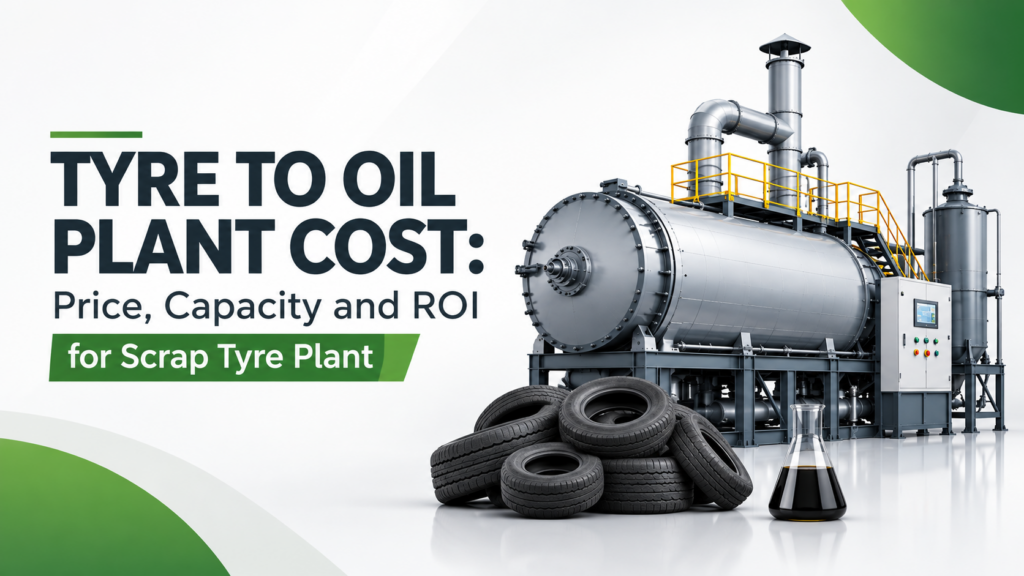
| Quick answer: The tyre to oil plant cost depends mostly on capacity and automation. A small batch machine usually costs ₹26 lakh to ₹80 lakh, a semi-continuous unit roughly ₹88 lakh to ₹2.2 crore, and a fully continuous line can start near ₹3 crore and pass ₹9 crore. Add 20 to 40 percent on top for freight, installation, pollution control and permits. |
Ask five suppliers for a price and you’ll get five different numbers. That isn’t always dishonesty. Two machines with the same capacity can differ in reactor thickness, automation, pollution control and after-sales support, and those differences decide how long the plant lasts. This guide lays out what you pay for, what you’ll spend after the machine arrives, and how long the money takes to come back. All figures are indicative, based on typical supplier quotes, so always get a written quotation before you decide.
How Much Does a Scrap Tyre Oil Plant Cost by Capacity?
| Plant type | Capacity | Machine price (INR, approx.) | Best suited for |
| Small batch | 6 tonnes per batch | ₹26–44 lakh | Pilot projects, first-time buyers |
| Medium batch | 10-12 tonnes per batch | ₹44-80 lakh | Small recyclers |
| Semi-continuous | 15-24 tonnes per day | ₹88 lakh-2.2 crore | Growing businesses |
| Fully continuous | 50 tonnes per day | ₹3-9 crore+ | Large recycling companies |
Those figures cover the machine only, usually ex-works. Treat them as the starting point of your scrap tyre oil plant budget, not the final number.
What Else Adds to the Tyre to Oil Plant Cost?
First-time buyers often look only at the machine price and get a nasty surprise later. These extras can add 20 to 40 percent:
- Freight and import duty. Shipping, insurance and customs often add 10 to 25 percent, depending on your country.
- Installation and commissioning. Engineers, cranes, foundations and test runs.
- Land and shed. Covered space for the plant, plus tyre storage and fire lanes.
- Pollution control. Dedusting, desulphurisation and gas cleaning. Never skip this to save money.
- Permits and consultants. Environmental clearance and fire safety approval take time and fees.
- Working capital. Your first stock of tyres, startup fuel, wages and a few months of cash buffer.
- Oil tanks and a shredder. Optional, but useful.
What Are the Running Costs of an Old Tyre Oil Plant?
Once the plant is running, the daily bill is lower than most people expect, but it’s never zero. For an old tyre oil plant, the main items are tyre purchase or collection, labour, utilities, maintenance and waste disposal. In some markets tyres are cheap or even free, and in others you earn a collection fee. Fuel is only needed to start the first batch, because the plant’s own gas then covers a large part of the heating. Maintenance matters most. Batch reactors take heavy thermal stress and may need replacing after a few years, depending on steel quality and how carefully the plant is run. Budget for spare parts from day one.
How Much Can an Old Tyre Oil Plant Earn? A Worked Example
Here’s a simple example for a batch machine processing 8 tonnes of tyres per working day. The prices are conservative and the figures are illustrative, not a quote or a promise.
| Item | Quantity | Rate (INR) | Per day (INR) |
| Pyrolysis oil | 3.4 t | 26,000 per t | 88,400 |
| Carbon black | 2.6 t | 5,000 per t | 13,000 |
| Steel wire | 1.0 t | 13,000 per t | 13,000 |
| Total revenue | – | – | 1,14,400 |
| Tyres | 8 t | 3,500 per t | 28,000 |
| Labour | – | – | 13,000 |
| Power, water and fuel | – | – | 13,000 |
| Maintenance and other | – | – | 13,000 |
| Total costs | – | – | 67,000 |
| Daily margin | – | – | 47,400 |
At 250 working days a year, that margin comes to about ₹1.19 crore. If the all-in investment is ₹95 lakh, payback is around ten months on paper. In real life, plan for 12 to 24 months, because downtime, price swings and slow sales eat into the margin. Loan interest and tax are not included.
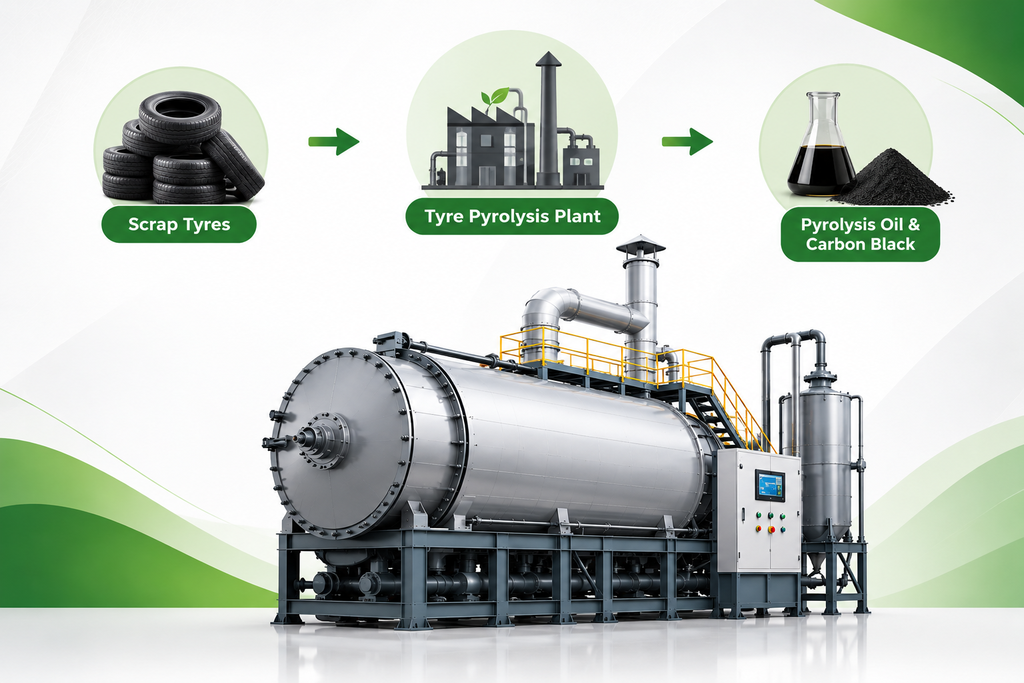
What Pushes the Tyre to Oil Plant Cost Up or Down?
- Capacity. Bigger machines cost more, but the price per tonne of capacity usually falls.
- Automation. Automatic feeding and discharge cost extra and save labour.
- Reactor steel. Boiler-grade Q345R plate costs more than ordinary steel and lasts longer.
- Pollution control. A full gas cleaning package adds to the quote but keeps you legal.
- Origin and support. A supplier with local engineers charges more than one who ships and disappears.
Batch or Continuous: Which Is Cheaper in the Long Run?
A batch machine wins on purchase price, but a continuous line wins on labour and uptime. Batch plants stop for cooling and discharge after every cycle, which means more handling and more wear on the reactor. Continuous plants feed and discharge automatically, so they run for days without stopping and need fewer workers per tonne. The catch is the tyre supply. A continuous line sitting half empty loses money fast. If you can’t guarantee at least 20 tonnes of tyres a day, a batch setup, or a few of them side by side, is usually the safer bet for an old tyre oil plant project.
Hidden Costs Most Buyers Forget
A few bills don’t show up in any brochure. Carbon black has to be stored and moved, and some buyers reject it if it’s dusty or damp. Oil that fails a buyer’s test gets sold at a discount. Cooling water needs treatment so the pipes don’t scale up. Insurance and site security cost money, and so does training your operators properly. None of these is huge alone, but together they can eat several percentage points of your margin. Put each one in your budget, even if the number is only a guess for an old tyre oil plant you haven’t built yet.
How to Compare Quotes Properly
- Check what the capacity figure means. Some suppliers quote per batch and others per day.
- List what’s included: condenser, dedusting, tanks, installation and training.
- Compare reactor steel grade and thickness, not just the price.
- Ask about warranty length and who pays for spare parts.
- Get the delivery time and payment terms in writing.
Is a Second-Hand Scrap Tyre Oil Plant Worth It?
Used machines look cheap, but the reactor is the part that wears out, and you can’t judge it from the outside. If you consider a used scrap tyre oil plant, ask for the operating hours, thickness test reports and pressure test certificates. Without those papers, you’re guessing.
Can You Finance the Project?
Many banks treat recycling as a green project, and some governments offer subsidies or cheaper loans for it. Ask your bank what it needs, which is usually a project report, quotes from suppliers, proof of permits and a signed tyre supply plan. A lender who sees those papers takes you far more seriously than one who sees only a brochure.
How to Lower the Risk Before You Invest
- Start with one batch unit and expand only after the numbers hold up.
- Sign a tyre supply agreement before ordering the machine.
- Find buyers for oil, carbon black and steel in advance.
- Visit a running reference plant and talk to its operator.
- Compare at least three written quotes on the same specification.
- Keep a 10 to 15 percent contingency for surprises.
Key Takeaways
- Machine prices range from about ₹26 lakh to over ₹9 crore.
- Extras can add 20 to 40 percent to the final bill.
- Realistic payback is 12 to 24 months, not a few weeks.
- Never trade away pollution control to win a lower quote.
Frequently Asked Questions
What is the average tyre to oil plant cost?
For a small or medium batch machine, expect ₹26 lakh to ₹80 lakh for the equipment. With freight, installation, pollution control and permits, the total project cost is often 20 to 40 percent higher.
How long does it take to recover the investment?
Many well-run projects aim for 12 to 24 months. Quotes promising payback in a few months usually assume full capacity every day and high oil prices, which is rare.
Is a scrap tyre oil plant profitable?
It can be, when tyres are cheap, the plant runs reliably and you have buyers for oil, carbon black and steel. Profit drops quickly if oil prices fall or the plant sits idle for weeks.
Is a second-hand plant cheaper?
The upfront price is lower, but the reactor may be near the end of its life. Ask for thickness tests and pressure certificates, or you could end up paying twice.
Can an old tyre oil plant handle both car and truck tyres?
Yes. Most machines accept every tyre type, though truck tyres give slightly more oil. Remove stones and metal rims before loading.
Which cost should I never cut?
Pollution control and safety systems. Cutting them can lead to fines, forced closure or an accident that costs far more than you saved.
Want to understand the technology you’ll be paying for? Read our complete guide to the waste tyre to oil plant, then see what the oil sells for in our guide to tyre pyrolysis oil.